
Automotive Press Automation

Transfer & Stamping Automation Systems

Press-line automation for multi-station stamping, press-to-press handling, sheet feeding, robotic press tending, and high-tonnage automotive production.

Velsson supports 60T–3000T press applications where stable part transfer, reliable sheet handling, consistent stroke performance, and controlled material flow are critical to production output.

Automated press-line transfer and material handling
60T–3000T Press application range
Multi-Station Transfer automation
Robotic Press tending and handling
Integrated Feeding, transfer and line control

Press-Line Performance

Where Transfer Performance Affects Production

Press utilization depends on more than press capacity. Transfer stability, sheet presentation, station timing, changeover efficiency, and operator interaction all affect achievable stroke rate and uptime.

Transfer Stability

Unstable Part Transfer Limits Stroke Rate

Vibration, inconsistent handoffs, or poor alignment between stations can restrict press speed and create production interruptions.

Manual Handling

Loading and Transfer Require Too Much Operator Interaction

Automated transfer, robotic press tending, and controlled sheet handling can reduce repetitive manual loading and operator exposure around press equipment.

Material Control

Misfeeds and Sheet Separation Interrupt Production

Feeding, depalletizing, sheet separation, and controlled loading influence transfer reliability before the first stamping operation begins.

Changeover

Model Changes Reduce Available Production Time

Stored motion parameters, model switching, configurable tooling, and repeatable setup can support more efficient production changeovers.

Press Transfer Systems

Transfer Configurations for Different Press Environments

Transfer architecture is selected according to press tonnage, workpiece size, number of stations, target stroke rate, die layout, material, and the required movement between operations.

800–3000T

Heavy-Duty Two-Arm 3D Transfer

Designed for high-tonnage stamping applications requiring controlled three-dimensional movement and stable handling of large automotive components.

200–800T

Independent Transfer Systems

Independent transfer architecture for multi-station applications requiring configurable workpiece movement between press operations.

60–315T

Rod-Connecting Transfer Systems

Transfer configuration for smaller and mid-range press applications requiring repeatable station-to-station movement.

60–315T

High-Speed Tilting Transfer Systems

High-speed transfer configuration for applications where stable part movement and faster cycle performance are required.
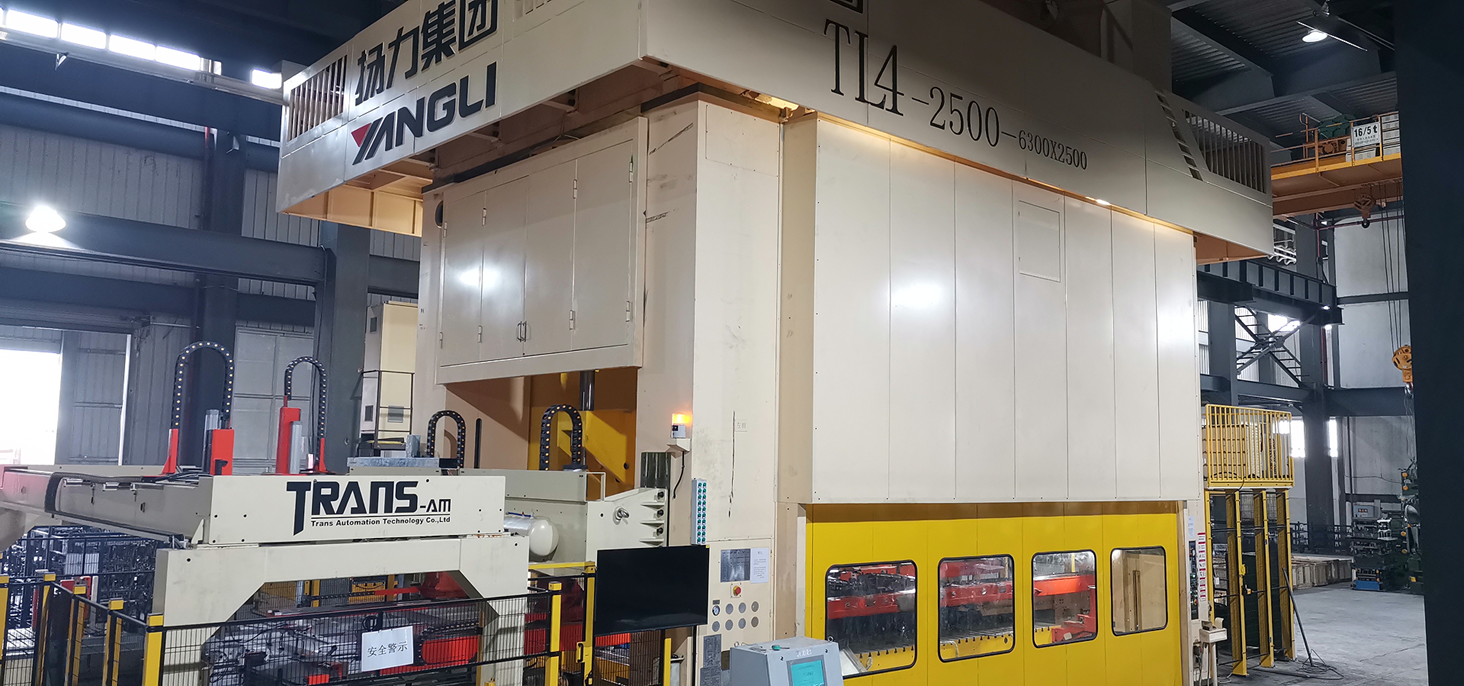
Heavy-duty two-arm 3D transfer system integrated with a large automotive stamping press

High-Tonnage Stamping

High-Tonnage Transfer for Structural Automotive Components

Large stamping programs require stable transfer under heavier loads while maintaining alignment, stroke performance, and predictable handoff timing across multiple stations.

Heavy-duty transfer systems support high-volume production of large structural components and applications using high-strength steel, aluminum, and other demanding automotive materials.

  • Controlled workpiece transfer between stations
  • Stable alignment across multiple dies
  • Reduced transfer vibration at higher operating speeds
  • Coordinated operation across connected press stations
  • Support for large structural automotive components
  • Modular expansion for future production requirements

Multi-Station Automation

Maintain Consistent Handoff Timing Across the Press Line

Multi-station stamping requires consistent part movement from one operation to the next. Transfer timing, press operation, tooling, and material flow have to remain coordinated throughout the cycle.

Properly integrated transfer automation supports stable takt alignment, consistent cycle performance, and more predictable throughput across connected press operations.

  • Press-to-press part handling
  • Multi-station transfer automation
  • Coordinated robotic operation
  • Stable station-to-station timing
  • Controlled end-of-line material flow
Multi-station press-line transfer automation

Integrated Material Flow

Coordinate Transfer Equipment Across the Production Line

Transfer systems can be configured to coordinate multiple handling units, press stations, guarding, controls, and downstream material movement within one production environment.

The objective is consistent part positioning and transfer timing throughout the stamping sequence so individual stations do not create avoidable bottlenecks elsewhere on the line.
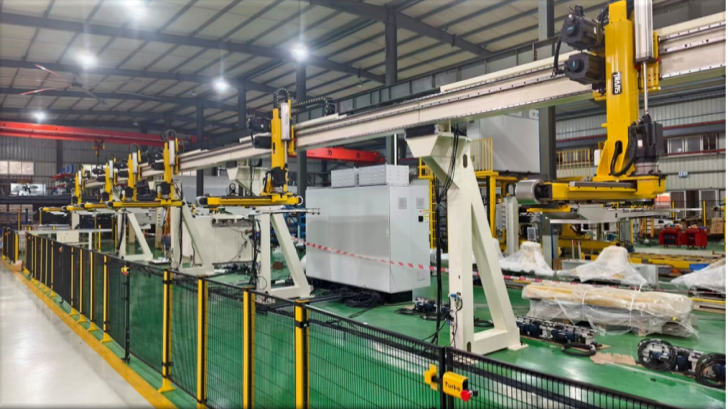
Multi-station automotive press-line transfer automation system with synchronized material handling
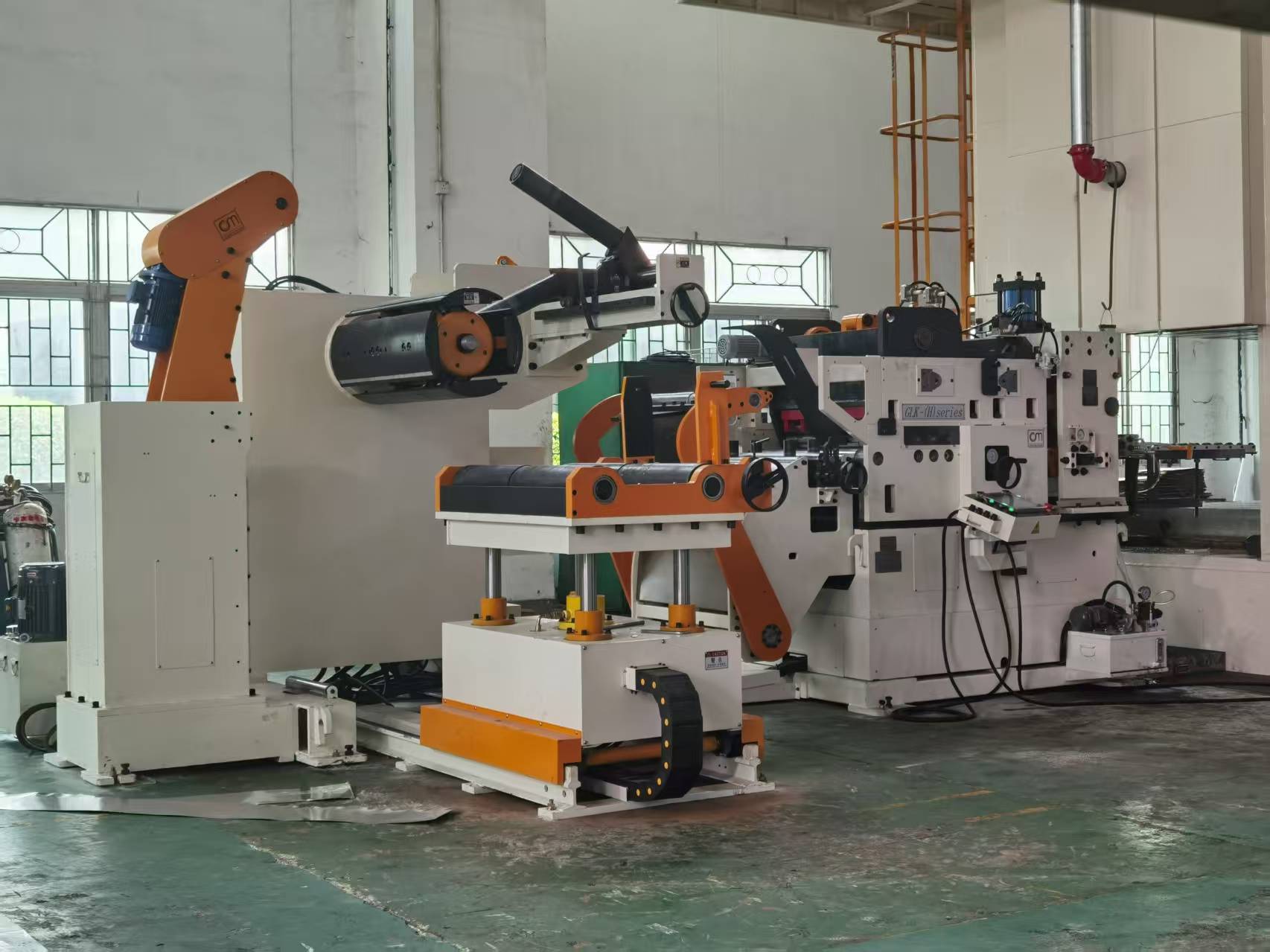
Coil feed and straightening system for automated automotive press-line material handling

Feeding & Sheet Control

Reliable Material Presentation Before the First Press Operation

Stable stamping production begins with controlled loading, separation, feeding, and positioning of the incoming material.

Feeding and sheet-control systems can be integrated with the press line to reduce misfeeds, improve material changeover, and maintain continuous production.

  • Coil feeding and straightening
  • Depalletizing systems
  • Sheet separation
  • Crane-boom loading
  • Tail-material conveying
  • First/last-sheet emptying functions
  • Stamping oiling integration

Transfer System Controls

Technical Features That Affect Cycle Stability

Transfer performance depends on motion control, repeatability, changeover efficiency, integration interfaces, and safety functions as much as the mechanical hardware.

High-Speed Anti-Shake Reduces unwanted motion and transfer instability during faster production cycles.
Automatic Motion Curves Supports optimized movement profiles for production transfer sequences.
Model Save & Switching Store and recall production settings to support faster product changeovers.
Dual-Piece Mode Supports applications designed around simultaneous or optimized multi-part production.
Extension Interfaces Provides integration points for surrounding production equipment and automation systems.
Interference Checking Supports motion analysis and evaluation of equipment movement within the transfer sequence.
End-Pickup Support Supports engineering of application-specific end pickup and handling requirements.
Safety Integration Systems can incorporate light curtains, safety locks, sensors, monitoring, and project-specific LOTO requirements.

Integrated Stamping Lines

Beyond the Transfer Mechanism

Press automation projects can extend beyond one transfer system to include robotics, feeding, thermoforming, stacking, controls, guarding, and surrounding production-line equipment.

Robot-Integrated Lines

Coordinate industrial robots with press operations, part transfer, loading, unloading, and downstream processes.

Thermoforming Automation

Support automated forming environments requiring high-temperature gripping and controlled material handling.

Output & Stacking Lines

Automate end-of-line part movement, stacking, organization, and downstream material flow.

High-Strength Materials

Configure handling for ordinary plate, high-strength steel, aluminum, and structural automotive applications.

3-in-1 Systems

Integrate feeding, straightening, and material control functions for compatible press-line applications.

Retrofit Projects

Add transfer, feeding, robotics, or controls to compatible existing press environments when line modernization is required.

Project Triggers

When Press-Line Automation Should Be Evaluated

Press Utilization Is Below Target

Transfer delays, handling interruptions, or unstable material flow are reducing available production time.

Transfer Instability Limits Stroke Rate

Press capacity is available, but the movement of parts between operations prevents the line from reaching the required rate.

New Structural or EV Programs Are Launching

New parts, larger components, different materials, or revised production volumes require a different transfer architecture.

Changeover Time Is Affecting Throughput

Frequent program changes or setup requirements are consuming production time that could be recovered through better automation.

Technical Evaluation

Information Needed to Evaluate a Press-Line Project

Press automation selection depends on the existing line, component, required motion, production rate, and material.

Providing the basic production parameters allows Velsson to evaluate transfer-system compatibility and the appropriate automation architecture.

Press tonnage and model
Number of stations / dies
Current transfer method
Target strokes per minute
Material type
Part size and weight
Changeover requirements
Safety and compliance requirements
Material information may include conventional steel, high-strength steel, aluminum, or other materials requiring application-specific handling and transfer evaluation.

Transfer & Stamping Questions

Press-Line Automation FAQs

What press sizes can Velsson support with transfer automation?
Transfer and stamping automation can be configured for press applications ranging from approximately 60 tons to 3000 tons. The appropriate transfer architecture depends on tonnage, part size, station count, dies, material, target production rate, and required movement.
What types of press transfer systems are available?
Available configurations include heavy-duty two-arm 3D transfer systems, independent transfer systems, rod-connecting transfer systems, and high-speed tilting transfer systems for different press ranges and production requirements.
Can transfer automation be integrated with an existing press line?
Compatible existing press equipment can be evaluated for retrofit automation. Integration requirements depend on press controls, physical layout, available interfaces, tooling, safety requirements, cycle targets, and the current transfer method.
Can Velsson automate sheet feeding and depalletizing?
Yes. Press-line projects can include coil feeding, straightening, depalletizing, sheet separation, loading, tail-material conveying, first/last-sheet handling, and stamping oiling functions as required by the application.
Can these systems handle high-strength steel and aluminum?
Transfer systems can be configured for automotive applications using high-strength steel, aluminum, conventional steel, and large structural components. Material, thickness, geometry, weight, and production rate are reviewed during system selection.
What information should we provide for a technical evaluation?
Useful information includes press tonnage and model, number of stations or dies, current transfer method, target strokes per minute, part dimensions and weight, material type, changeover requirements, current production constraints, and applicable safety requirements.

Press-Line Automation Consultation

Send Us Your Press-Line Requirements

Share the press tonnage, number of stations, current transfer method, target stroke rate, material, and the production constraint you need to address. Velsson can evaluate the application and determine the appropriate transfer and stamping automation approach.

Search Velsson